
KUANG TAI METAL INDUSTRIAL CO., LTD.
廣泰金屬工業股份有限公司
No.20, Gongye Rd., Erzhen, Guantian Dist.
Tainan City 72042, Taiwan
TEL:886-6-6987615 FAX:886-6-6987315

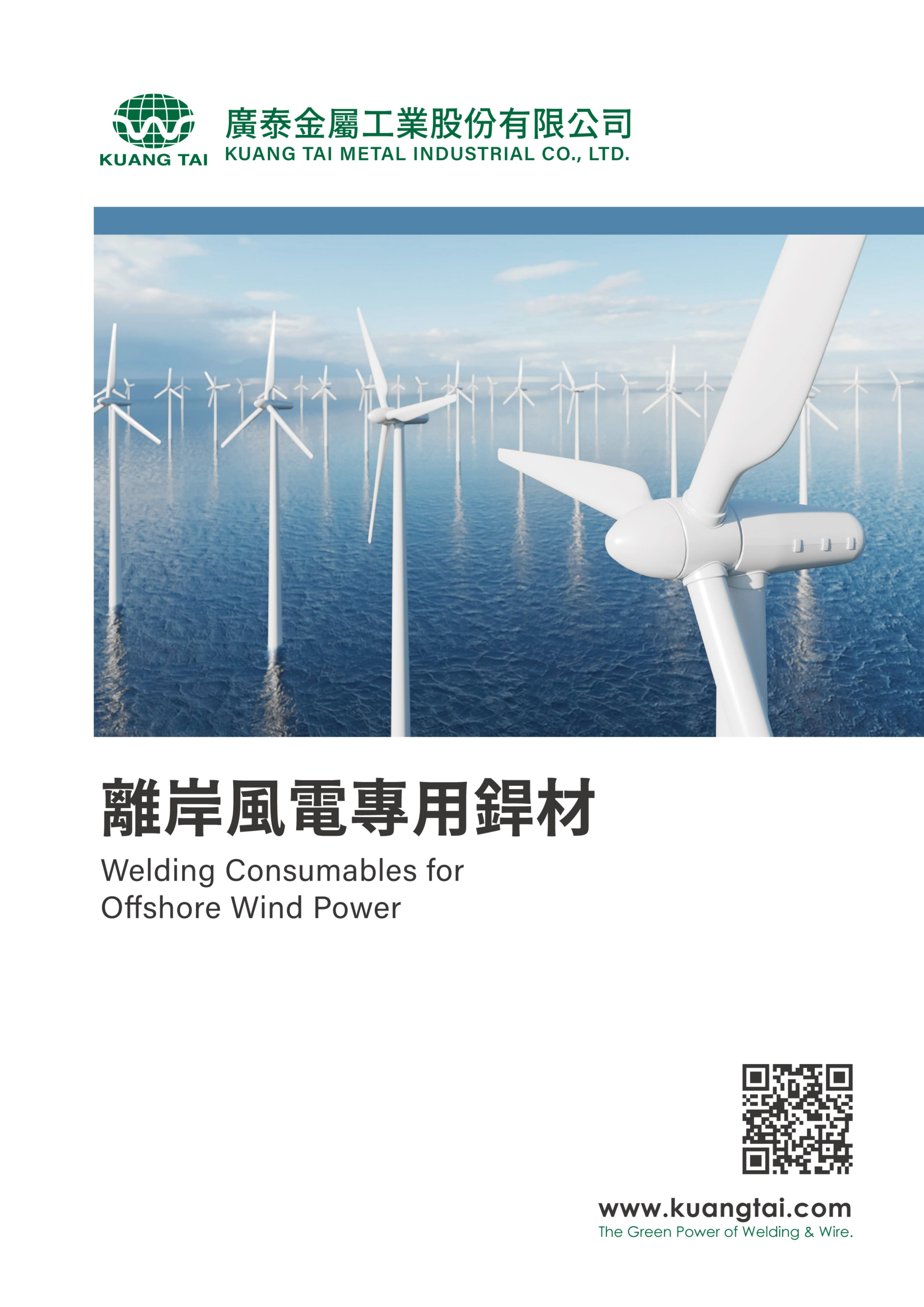
Offshore wind power structures operate in harsh marine environments, exposed to high salinity, humidity, tidal fluctuations, and strong wind loads. Key welded components such as tower sections, nacelle bases, foundations, and transition pieces require not only high strength but also excellent toughness and corrosion resistance to ensure a service life of over 20 years.
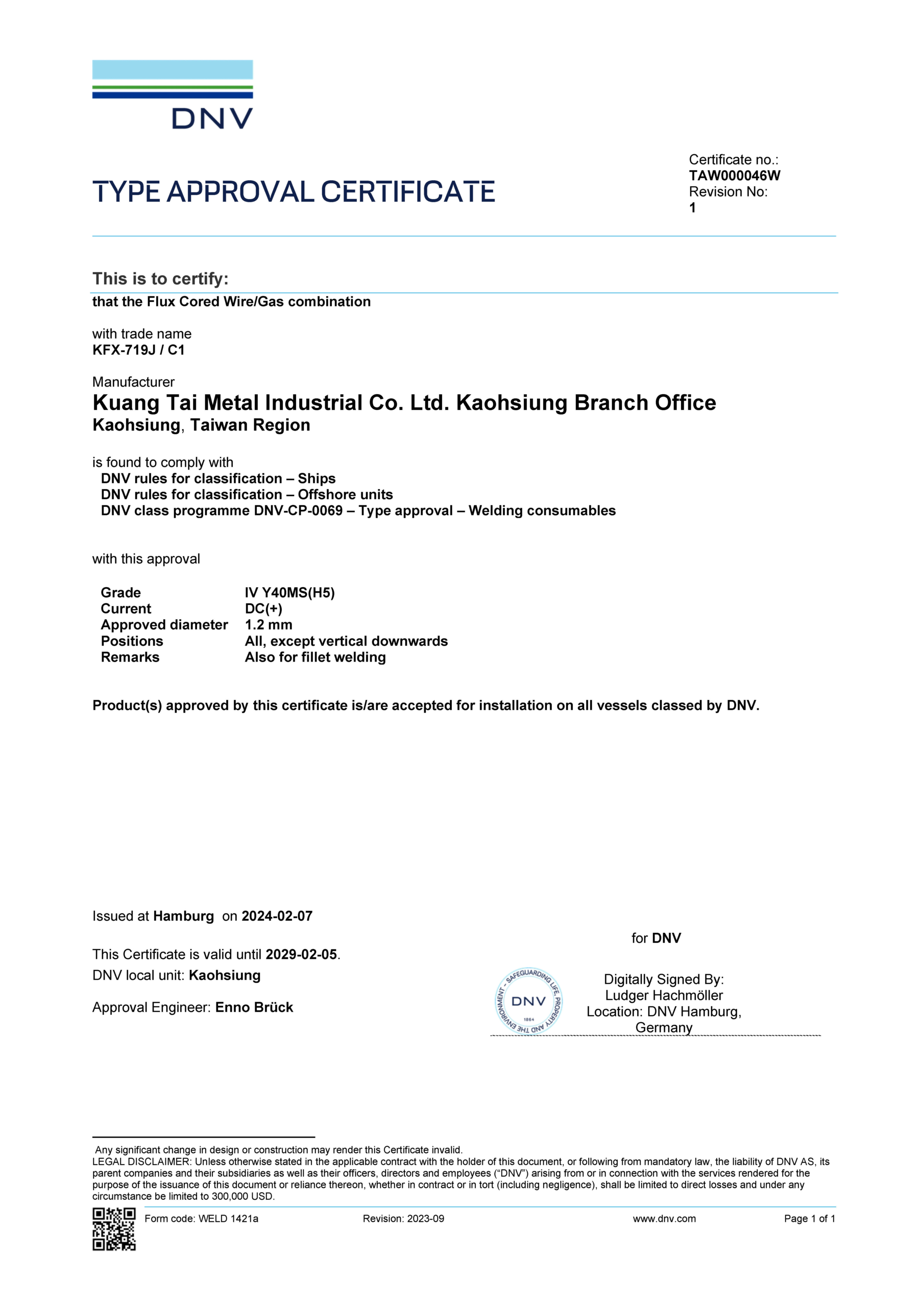
Flux-Cored Wire (FCAW)
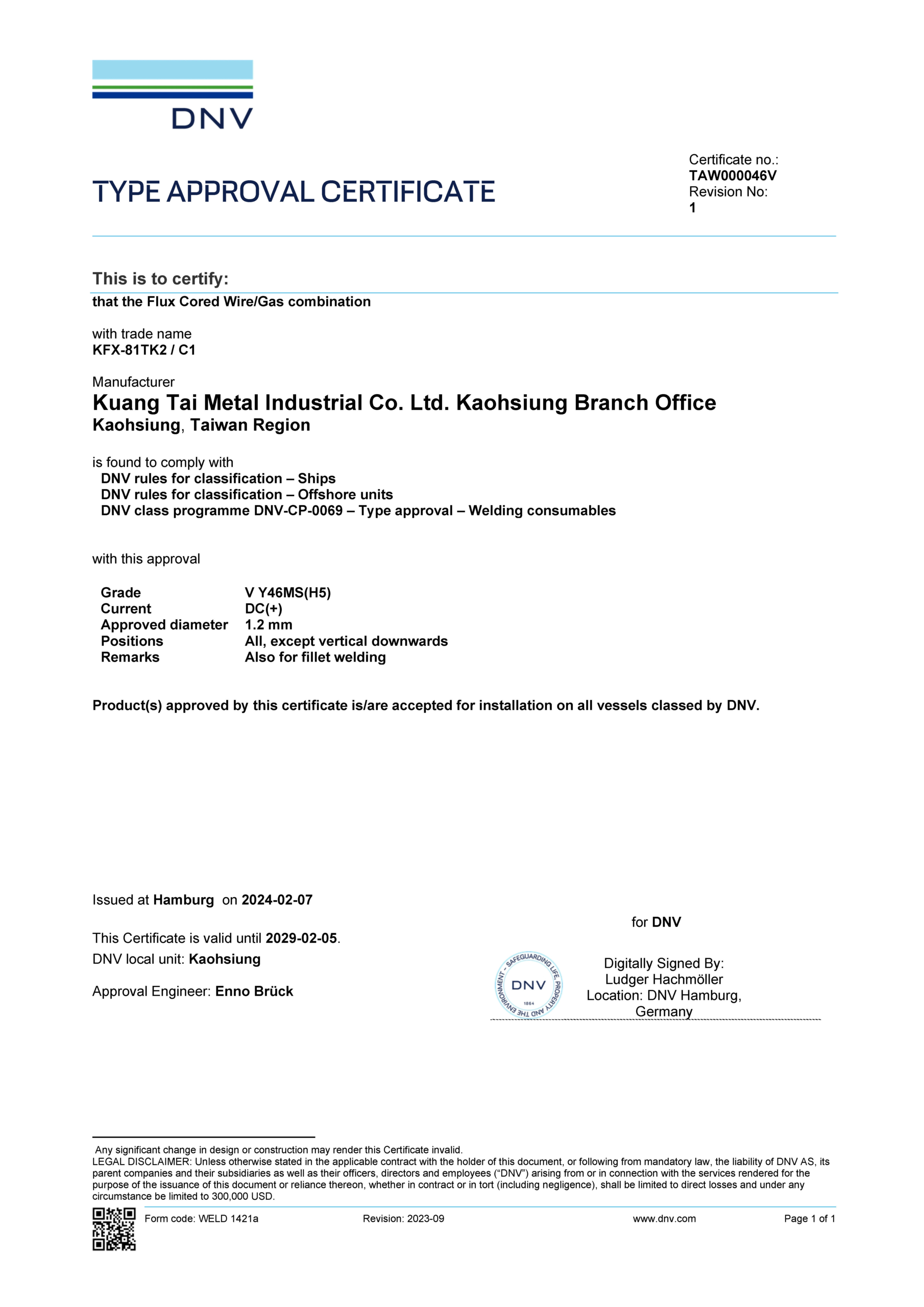
E71T-9C/M, E81T1-K2:
•All position welding
•High deposition rate
•Suitable for on-site construction
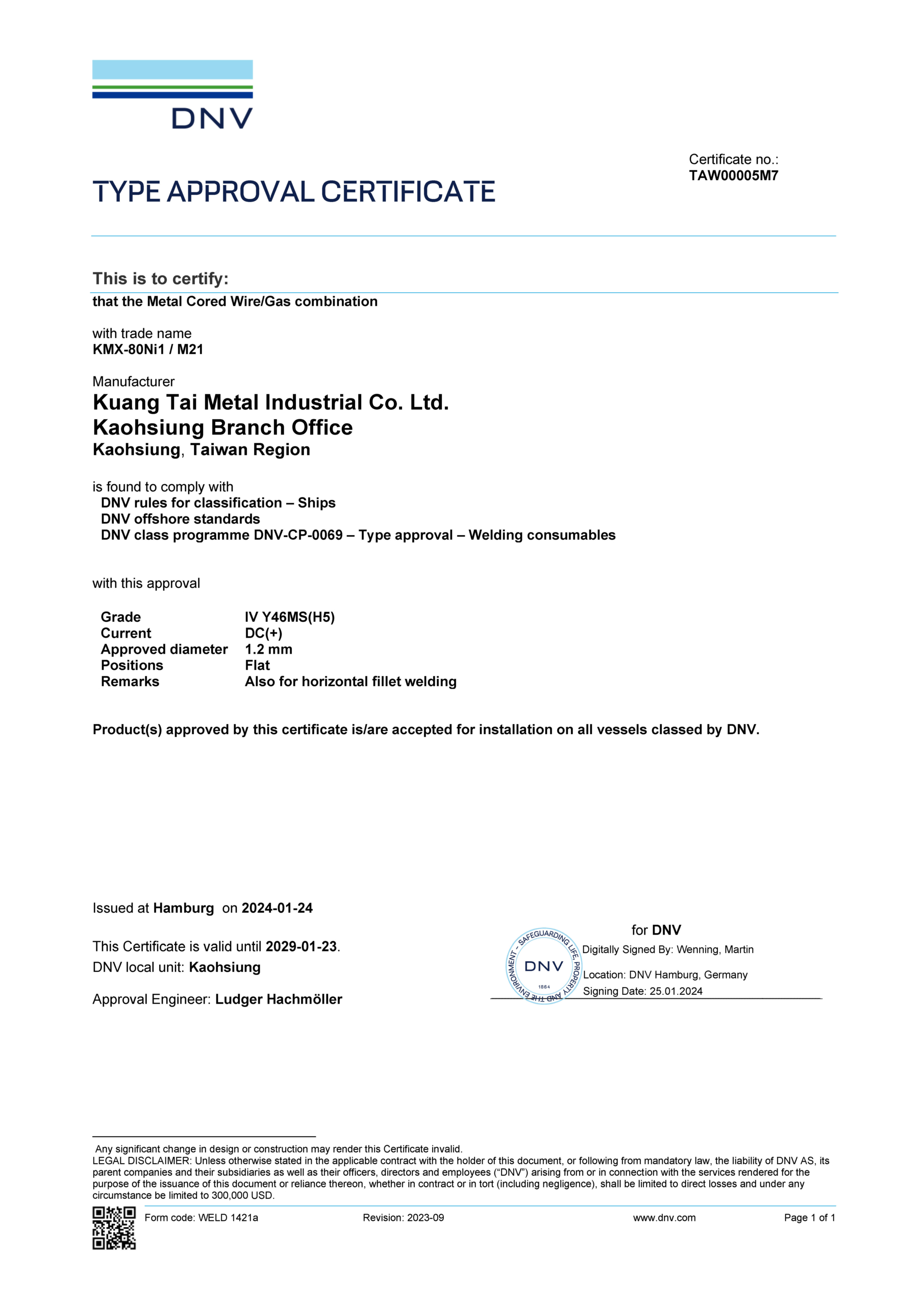
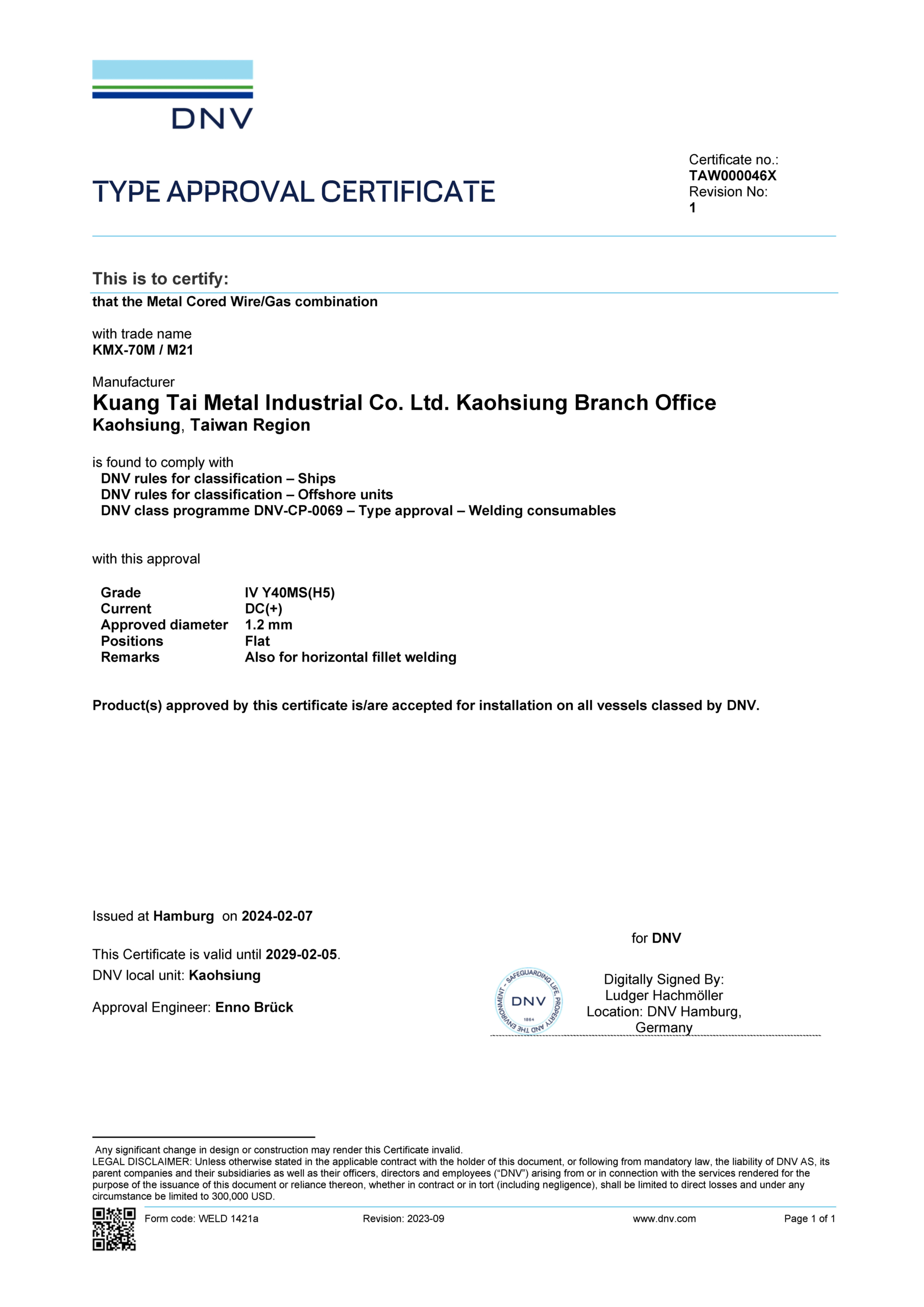
Metal-Cored Wire (MCAW)
E70C-6M, E80C-Ni1:
•All position welding
•High deposition rate
•Suitable for root pass welding
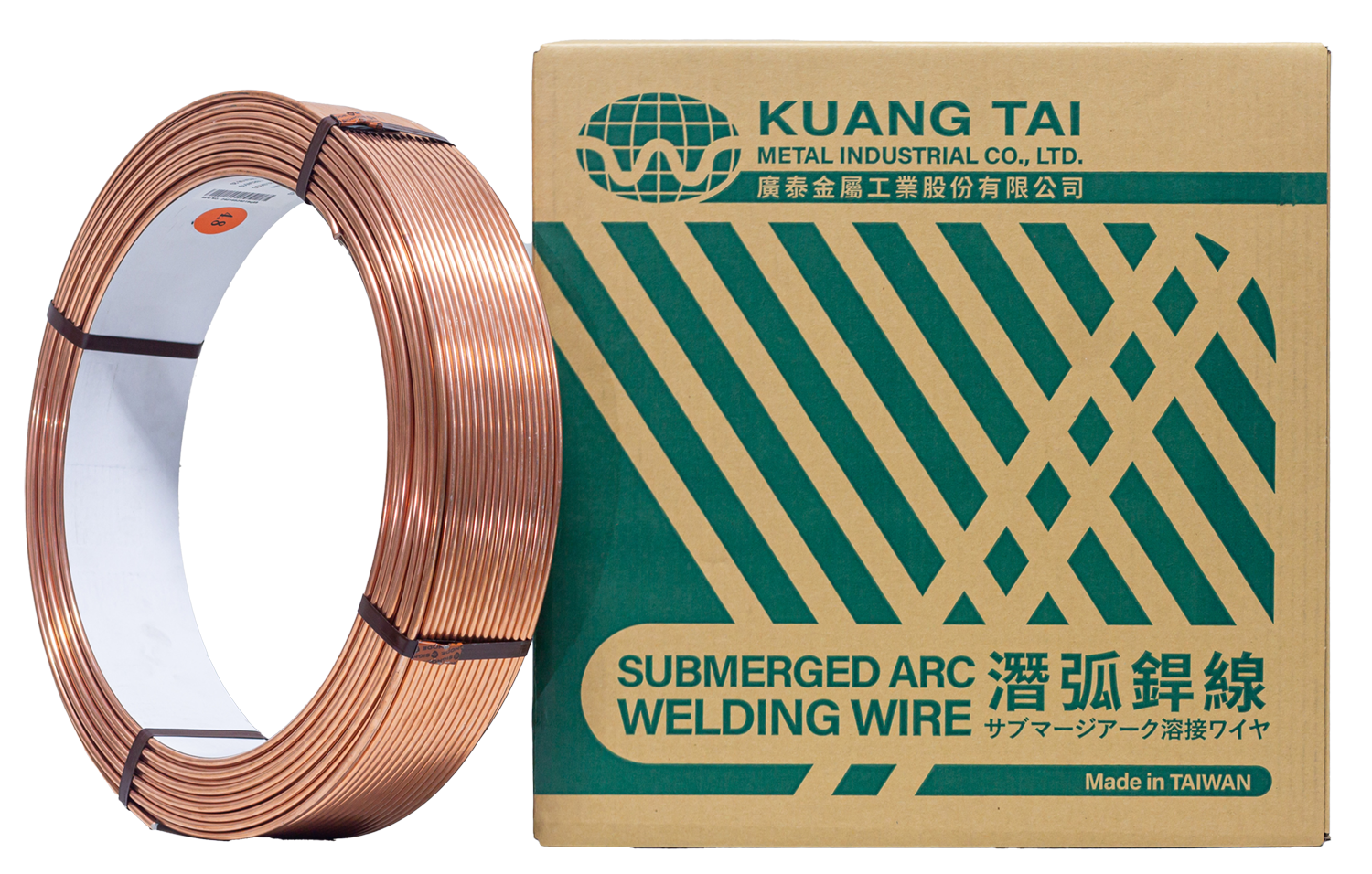
Submerged Arc Wire & Flux (SAW)
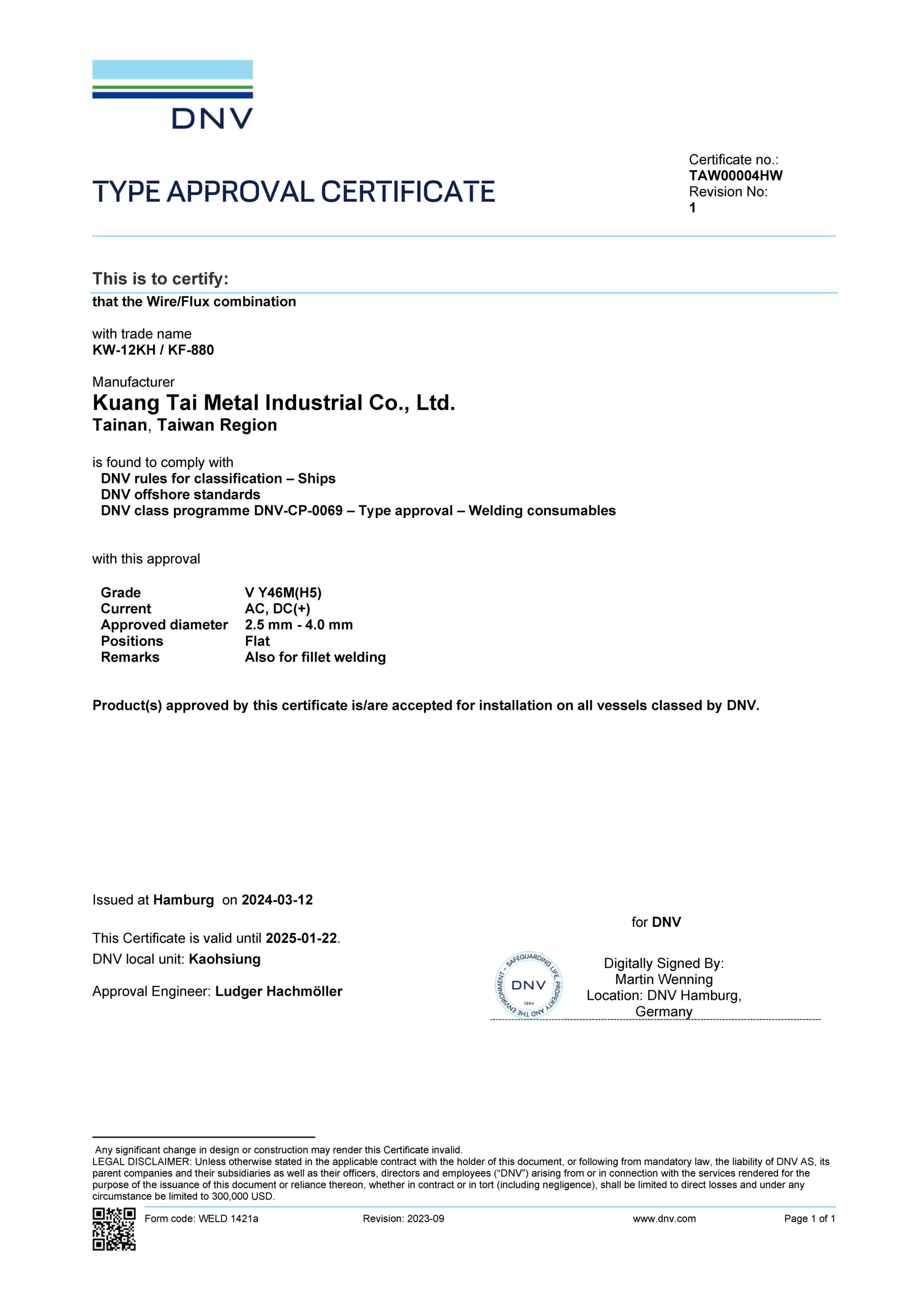
F7A4-EH14, F7A6-EH12K
•Automatic welding
•High deposition rate
•Suitable for L-line, C-line, shear key welding
廣泰金屬工業股份有限公司
No.20, Gongye Rd., Erzhen, Guantian Dist.
Tainan City 72042, Taiwan
TEL:886-6-6987615 FAX:886-6-6987315